
ZHOU SONG
Who Is Zhou Song? Market Position, Museum Exhibitions and International Recognition
Quick Facts
Name: Zhou Song (周松)
Born: 1982
Nationality: Chinese
Based in: Beijing
Mediums: Painting, sculpture, installation
Known for: Hyperrealism, post-humanism, AI and nature
Major institutions: Powerlong Museum, Osthaus Museum Hagen, Aurora Museum
Collections: Harvard University CAMLab, Benetton Foundation, Today Art Museum
Represented in Russia by: ROBINEAU Gallery
Zhou Song occupies a rare position in the global contemporary art market: a Chinese artist whose practice is simultaneously rooted in traditional philosophy and urgently engaged with the defining concerns of our technological moment. His meticulous hyperrealist paintings are not mere technical exercises; they are conceptual propositions about what nature, humanity, and intelligence mean in an age of artificial systems.
ROBINEAU Gallery holds a unique and early position in Zhou Song's international trajectory. The gallery was instrumental in bringing the artist to Russia for the first time, establishing a relationship and recognition within the region
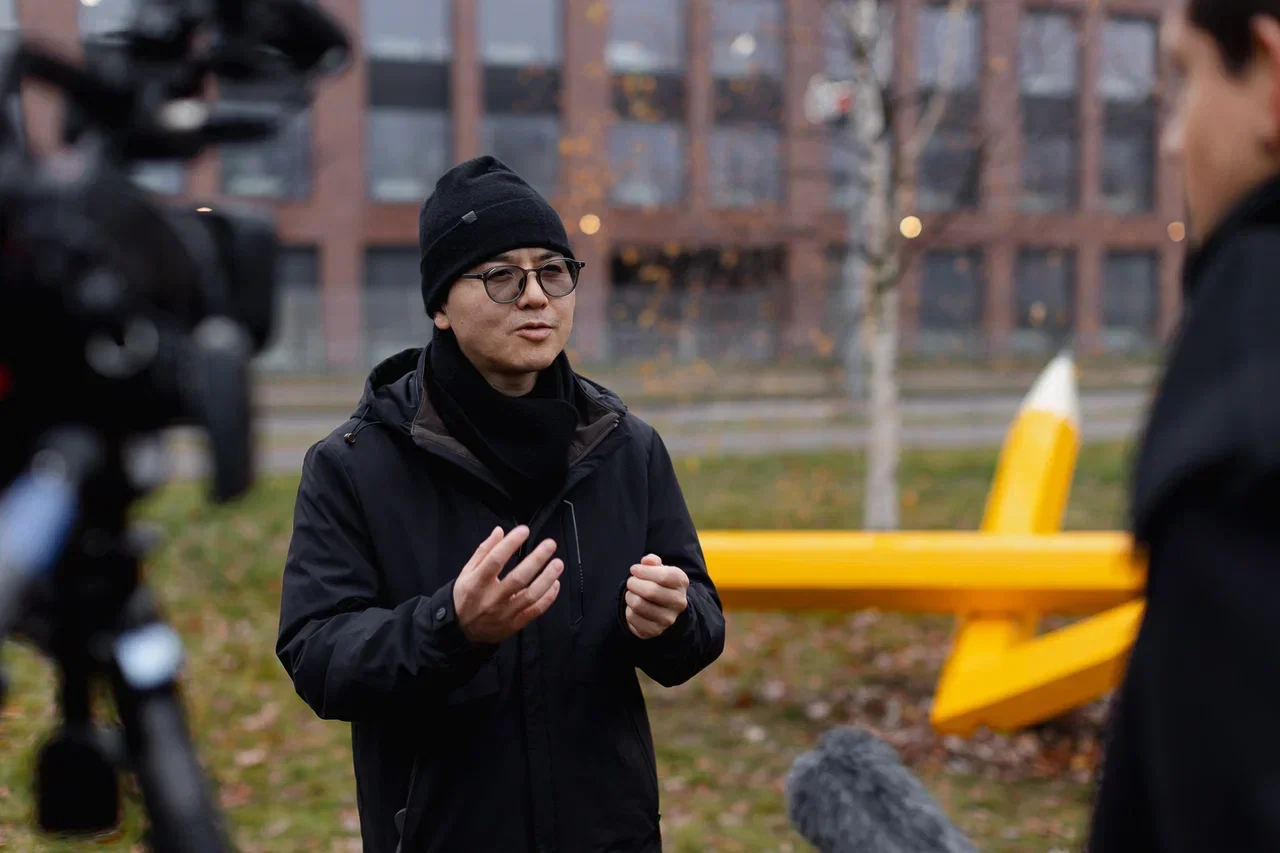
Inauguration of Zhou Song sculpture in Moscow's Skolkovo Park
Zhou Song and ROBINEAU Gallery
Inaugural Exhibition (2024): Zhou Song was selected as one of six artists for ROBINEAU's opening exhibition in Moscow, signalling the gallery's curatorial conviction in the artist from the outset.
Paris, Le Marais (Art Basel Paris Week, 2024): Zhou Song featured in ROBINEAU's first Parisian exhibition, placing him before an international collector audience during the world's most significant art fair.
Post-Landscape, his first Solo Exhibition in Russia (November 27, 2025 – January 8, 2026). ROBINEAU curated and presented Zhou Song's debut solo show in Russia, coinciding with the inauguration of his sculpture in Moscow's Skolkovo Park. This marks a pivotal moment: a major public artwork combined with a gallery exhibition, significantly raising the artist's profile in the Russian and CIS market.
ROBINEAU's relationship with Zhou Song is not that of a secondary commercial operator. The gallery has actively shaped the artist's presence in Russia providing curatorial context and market positioning.
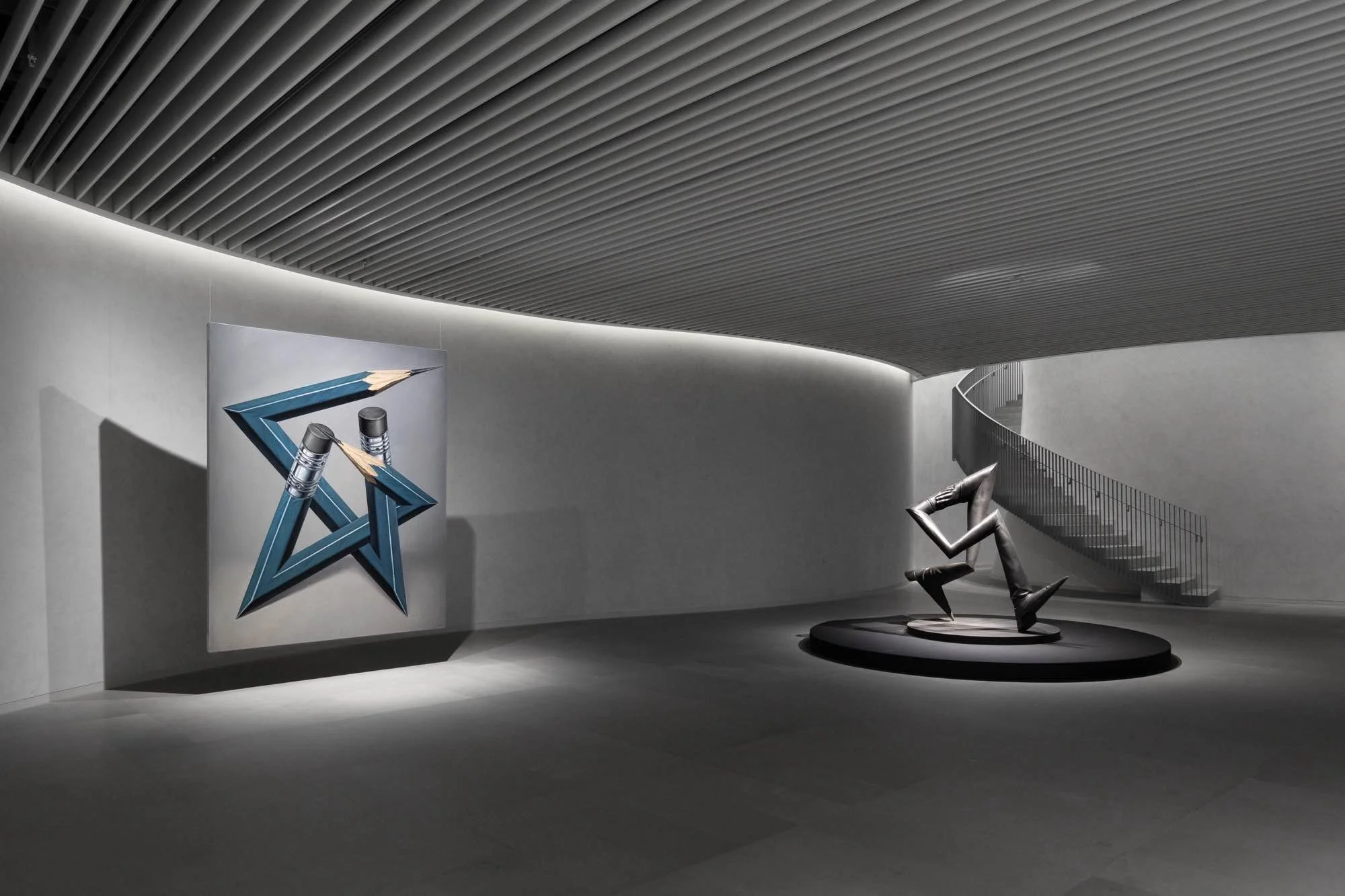
Museum set up painting and sculpture in China by Zhou Song
Museum Exhibitions and Institutional Recognition
The following assessment draws on ROBINEAU's direct curatorial experience with the artist, combined with publicly available market data.
Institutional Recognition : STRONG
Solo exhibitions at Powerlong Museum Shanghai, Osthaus Museum Hagen, Aurora Museum Shanghai, Guardian Art Center Beijing. Institutional Collections, Harvard University CAMLab, Benetton Foundation, HOW Art Museum, Today Art Museum
International Expansion : ACTIVE
First UK solo show at Maddox Gallery, London, April–May 2026.
Paris group show participitaion with ROBINEAU Gallery
59th Venice Biennale Parallel Exhibition
NordArt Büdelsdorf, Germany
13th Havana Biennial : Re-Thinking Future
Art Macau at the Galaxy Casino
Additionaly his works have appeared in projects and exhibitions involving: Grand Palais, France, Forte di Belvedere, Italy, Museum of Contemporary Art of Panama, National Gallery of Costa Rica
Thematic relevance : VERY STRONG
AI, nature, post-humanism: these are the defining cultural conversations of the decade. Zhou Song's work is structurally positioned at their intersection.
Auction History : MODERATE ( Which is a positive sign )
Secondary market concentrated in China; Western auction presence still emerging moderately
Entry point : FAVORABLE
The artist is at a pre-peak moment in Western markets. ROBINEAU collectors who acquired works in 2024–2025 hold a strategic early-mover advantage
Why Collectors Are Paying Attention to Zhou Song now ?
Recent Western Institutional Breakthrough: The Maddox Gallery London debut (Spring 2026) is the first major UK presentation. Western institutional validation typically precedes significant secondary market appreciation.
Public Art Footprint: The permanent sculpture at Skolkovo Park, Moscow, establishes Zhou Song's presence in the public realm, a dimension that broadens name recognition beyond gallery audiences.
Thematic Momentum: Collectors and institutions globally are accelerating acquisition of works engaging with AI and technology. Zhou Song's practice preceded this trend.
Russia & CIS Market Gap: ROBINEAU's early positioning means that Zhou Song remains significantly under-represented in Russian private collections relative to his international profile. This is an asymmetry that typically closes over time.
Chinese Contemporary Art Cycle: Following the correction of the late 2010s, Chinese contemporary art is re-entering international collector focus, with institutional and auction confidence rebuilding across the sector.
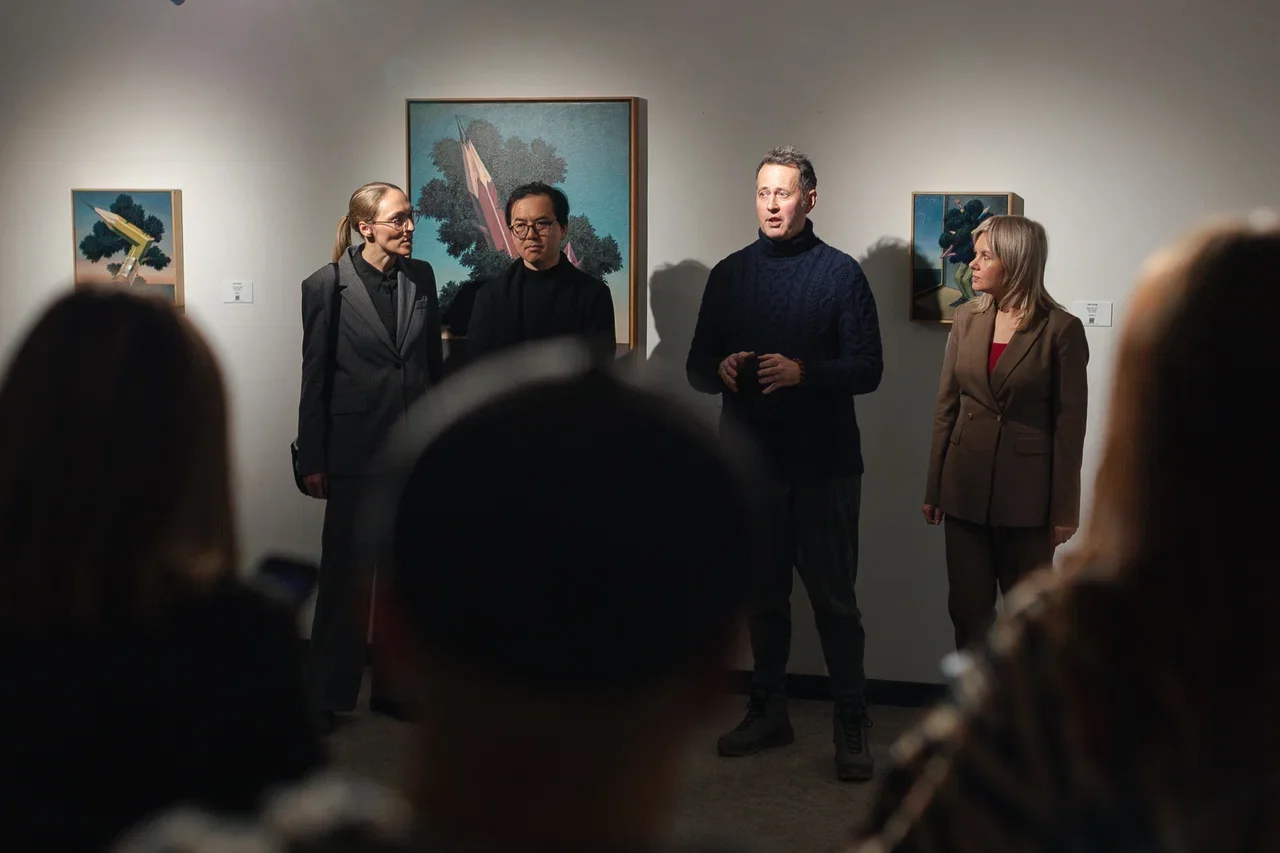
Press Conference during ZHOU SONG first solo show at ROBINEAU Gallery in Russia
Risks and Considerations for Collectors
As with any mid-career contemporary artist, collectors should weigh the following:
The secondary market for Zhou Song outside China remains limited. Works are primarily held and transacted through gallery relationships.
Geographic Concentration: The artist's institutional base is still predominantly Asian. Western museum acquisition (Tate, MoMA, Centre Pompidou tier) has not yet occurred and would represent a significant catalyst.
Market maturity: A 5–10 year perspective is appropriate for works at this stage of the artist's career to potentially show cosiderable growth and demand hopefuly eventualy leading to a bleu chip positioning down the line.
Zhou Song occupies a distinctive position within contemporary Chinese art. Supported by museum exhibitions, international expansion and themes that resonate with the defining technological and philosophical questions of our time, he represents an artist whose career continues to develop beyond the boundaries of geography. For collectors willing to adopt a long-term perspective, Zhou Song's current stage offers exposure to a practice that combines institutional credibility, cultural relevance and considerable room for international growth.
